
2025
Impact Report

How donations made through our community translated into real-world outcomes

Contents

About this report

The Life You Can Save's annual Impact Report shows how donations made through our community translated into real-world outcomes for people living in extreme poverty in 2025.

Inside, you'll find a transparent account of what we raised together, who it reached, and how cost-effectively it delivered impact across health, education, and livelihoods — alongside results from each of our recommended charities and Cause Funds.

It's a snapshot of what evidence-based giving made possible this year, and the trends shaping where it can go next.

Section 1

Our community's impact in 2025

Together, we reached more lives than ever before.

Total Raised

AUD $31M

directed to high-impact charities

People Reached

20M

across Health, Education and Livelihoods

Health

17M

people protected

Livelihoods

87K

families supported

Education

74,275

LAYS delivered

Health
64.5% 17M reached
Livelihoods
17.6% 87K reached
Education
17.9% 74,275 LAYS

Health

AUD $152

average cost per DALY averted

Highly effective

per WHO cost-effectiveness standards

Livelihoods

5.2x

average ROI

Highly effective

meets our 5x ROI threshold for high-impact livelihoods programmes

Education

AUD $96

average cost per LAYS delivered

Highly effective

per leading global education experts

* The 20M total includes beneficiaries reached through all TLYCS-supported charities. The intervention-level figures (Health, Education, Livelihoods) reflect impact from our recommended charities only, and do not sum to the total. For full methodology, see the Methodology section of this report.

† For definitions of DALY, LAYS and ROI, see Section 5 — Methodology of this report.

Key concept

What is the WHO-CHOICE cost-effectiveness benchmark?

The WHO-CHOICE framework provides internationally recognised thresholds for assessing whether a health intervention represents good value for money. An intervention that averts one year of ill-health (one DALY) for AUD $152 or less is considered highly cost-effective under this benchmark. The charities we recommend in the Health sector consistently meet or exceed this standard, meaning donations to these charities go further than most health interventions available globally.

Section 2

Impact of our Best Charities

In 2025, we raised nearly AUD $19 million directly for our recommended Best Charities — a list of organisations selected based on our ever-evolving research methodology, representing the best opportunities to fight extreme poverty with our community's donations. Here is how each organisation put those donations to work.

How we choose

How does The Life You Can Save decide which charities to recommend?

The impact results in this report belong to our partner charities — the organisations doing the work on the ground. Our role is to find them, rigorously evaluate them, and connect them with our community of givers. We assess organisations on their evidence base, leadership and management, monitoring and evaluation systems, transparency, and commitment to learning. Cost-effectiveness is one important factor, but not the only one. Every gift made through The Life You Can Save carries that full evaluation behind it.

Health & Wellbeing
OrganisationWhat our community's donations made possible
Against Malaria FoundationPurchased 244,139 bed nets to protect people from malaria-infected mosquitoes.
BreakthroughReached 24,489 adolescents with the Deep Transformation programme, helping young people build stronger identities within supportive family and community environments.
CEDOVIPHelped 1,064 women live free from violence for a year, ensuring their safety and dignity.
Development Media InternationalProvided essential health messages ensuring 66,775 sick children received treatment for malaria, pneumonia, or diarrhea.
Evidence ActionProvided safe drinking water to 123,730 people for one year; dewormed 519,666 children; tested 2,887 women for syphilis; and helped 519,666 children access iron and folic acid treatment.
Fistula FoundationCovered the cost of surgery, medication, and consumables for 12,454 women in Kenya.
Fred Hollows FoundationCovered the cost of 7,035 cataract surgeries.
Helen Keller IntlProvided supplements to protect 193,621 children from vitamin A deficiency disorders, including stunting, anemia, blindness, and death.
Iodine Global NetworkProtected 4,503,559 people from iodine deficiency disorders such as debilitating brain damage.
Living GoodsProvided 178,343 people with one year of access to essential medicines, health information, and trained community health workers.
Malaria ConsortiumProtected 40,824 children from malaria during a high-risk season.
New IncentivesEncouraged the full vaccination of 11,803 infants by providing cash incentives to caregivers over 15 months.
SankuProvided 6,614,850 children and adults with food-based micronutrient fortification.
Seva FoundationProvided 10,341 people in low-income countries with eye screening and eyeglasses.
Unlimit HealthProtected 735,396 children from parasitic worms.
Livelihoods
OrganisationWhat our community's donations made possible
GiveDirectlyTransferred AUD $1,737,662 directly to recipients to use as they wish.
One Acre FundProvided 35,586 families with start-up financing, high-quality farming inputs, agricultural training, and market facilitation.
Raising The VillageDelivered a 24-month programme to 12,938 people, supporting improvements in basic needs, climate-smart agriculture, and quality of life.
Village EnterpriseProvided seed capital to jumpstart 1,958 small businesses.
Education
OrganisationWhat our community's donations made possible
Educate GirlsIdentified, enrolled, and supported 244,139 out-of-school girls in India.
Food4EducationDelivered 230,798 nutritious meals to children in Kenyan schools.
TaRL AfricaDelivered Teaching at the Right Level programmes to 30,921 children.
Alumni
OrganisationWhat our community's donations made possible
Innovations for Poverty ActionChanneled AUD $46,042 to testing and promoting effective solutions to global poverty.
OxfamPurchased hygiene kits — including a bucket, soap, detergent, and other essentials — for 12,431 families.
Population Services InternationalHelped 12,701 people access essential healthcare services or products, including bed nets, HIV treatment or testing, and sexual and reproductive health products.
Total people reached across all recommended charities: 14.4 million

Reach figures reflect estimated beneficiaries supported through donations directed to each organisation in 2025. Alumni charities are former recommended charities that continue to receive donor support. Some figures represent units other than individual people (meals, nets, businesses, cash transferred) as noted in each description.

Section 3

Impact of our Cause Funds

Our cause funds allow our community to direct their giving to specific sectors. Here is what each fund achieved in 2025.

Maximize Your Impact Fund Raised: AUD $6.90M

The Maximize Your Impact Fund is an actively managed fund designed to address the interconnected challenges of extreme poverty, such as health, education, and living conditions, which extend far beyond a lack of income. We use the Global Multidimensional Poverty Index to identify the regions with the highest poverty levels and the specific factors driving them.

To optimise the impact of donor contributions, our fund managers provide strategic oversight by monitoring the global landscape for urgent funding gaps and opportunities with high additionality. This active management allows us to make discretionary grants that address time-sensitive needs.

Beneficiaries

4.4M

people reached

DALYs averted

44,131

years of ill-health prevented

LAYS delivered

25,655

years of quality education

ROI generated

AUD $5.2M

in additional household income

Funds allocation by sector

Health
64.5%
Livelihoods
17.6%
Education
17.9%
Key concept

What is the Maximize Your Impact Fund?

The Maximize Your Impact Fund is not a fixed allocation — it is actively managed. Rather than splitting donations evenly across charities, our fund managers monitor the global development landscape in real time, directing capital towards the most urgent opportunities with the highest potential for additional impact. This means every donation is placed where it can do the most good at the moment it arrives, not where it would have done the most good last year.

Key concept

What are discretionary grants and why do they matter?

Discretionary grants are time-sensitive allocations made by our fund managers when a funding gap or opportunity arises that requires fast action. Unlike standard allocations, discretionary grants allow TLYCS to respond to urgent needs in a way that fixed-schedule giving cannot. In 2025, two discretionary grants were made to organisations outside our Best Charities list, including Population Services International.

Health Fund Raised: AUD $472K

The Health Fund aims to help improve the access and quality of health services. Donations to the fund are used to support organisations that implement proven health interventions, particularly for diseases and conditions which are preventable or easily treatable in high-income countries.

Beneficiaries

578,696

people reached

DALYs averted

7,458

years of ill-health prevented

Supported charities (12)

Against Malaria FoundationBreakthroughCEDOVIPDevelopment Media InternationalEvidence ActionHelen Keller IntlIodine Global NetworkLiving GoodsMalaria ConsortiumNew IncentivesSankuUnlimit Health
Quality of Life Fund Raised: AUD $194K

The Quality of Life Fund supports sustained economic development by addressing the interconnected barriers of financial instability, low productivity, and treatable illness. By providing vital healthcare services such as eyesight restoration and fistula repair alongside financial training and agricultural inputs, this integrated approach ensures that poor health, lack of capital, and low productivity are addressed simultaneously.

Beneficiaries

21,212

people reached

DALYs averted

647

years of ill-health prevented

ROI generated

AUD $658K

in additional household income

Supported charities (7)

Fistula FoundationFred Hollows FoundationGiveDirectlyOne Acre FundRaising The VillageSeva FoundationVillage Enterprise
Education Fund Raised: AUD $111K

The Education Fund focuses on supporting educational opportunities for children and adolescents who live in extreme poverty. Charities in this fund work to increase access to and participation in education, while promoting literacy, numeracy, and life skills that create self-sufficiency. The Education Fund places emphasis on the compounding benefits of enrolling girls into education.

Learners reached

6,131

children and adolescents

LAYS delivered

3,247

years of quality education gained

Supported charities (2)

Educate GirlsTaRL Africa
Women and Girls Fund Raised: AUD $603K

The Women and Girls Fund focuses on tackling the disproportionate burden of extreme poverty that women and girls experience. The fund supports charities that work towards reshaping gender norms through school and community programmes, promoting women's inclusion and safety, and increasing access to education, maternal healthcare, and family planning services.

Health beneficiaries

~2,000

people protected

DALYs averted

1,780

years of ill-health prevented

Learners reached

6,100+

children and adolescents

LAYS delivered

7,400

years of quality education gained

Supported charities (4)

BreakthroughCEDOVIPEducate GirlsFistula Foundation

All figures are estimates based on 2025 donation allocation data. LAYS (Learning-Adjusted Years of Schooling) measure quality-adjusted educational outcomes and differ from simple learner headcounts.

Section 4

What we're watching

Across our portfolio, 2025 revealed three trends reshaping how lasting change happens in global development. Understanding them helps explain not just what our recommended charities achieved this year, but why the work is becoming more durable, more efficient, and more connected than ever.

Health

Our health charities are protecting lives at extraordinary scale, from preventing malaria in children during the riskiest months of the year, to fortifying flour for 31 million people, to restoring sight through nearly one million cataract surgeries. What unites them in 2025 is a shared pivot: from reaching more people to embedding their programmes into the systems that will serve those people permanently.

47M

children reached with vitamin A supplements by Helen Keller Intl, a record

21M

bed nets distributed by Against Malaria Foundation, protecting 38 million people

19,577

fistula surgeries performed by Fistula Foundation across 34 countries

Impact story

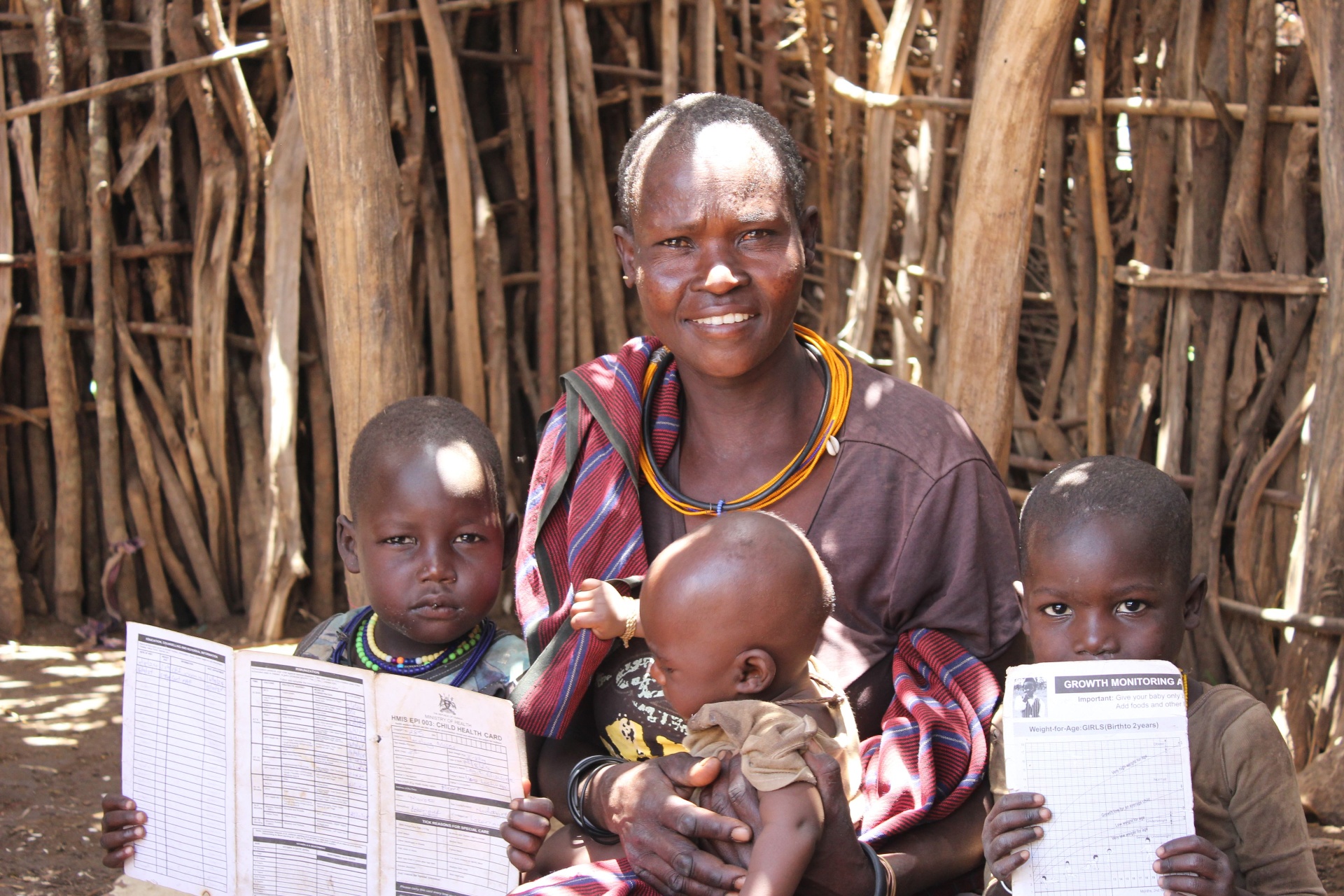
Malaria Consortium — Akide, Uganda

Malaria Consortium

For Akide, a mother in rural Uganda, getting her children to the nearest clinic meant miles of travel, lost income, and no guarantee of care. When malaria struck, she faced an impossible choice: pay for medicine or feed her family. That changed when community health workers began bringing malaria prevention directly to her village. Her children now receive monthly preventive treatment during peak malaria season. Fewer bouts of malaria. Fewer emergency costs. More stability for her family. "No mother should have to choose between her child's health and their next meal."

Key concept

What is Seasonal Malaria Chemoprevention (SMC)?

SMC is a preventive strategy that delivers antimalarial medicines to young children during the months when malaria transmission is highest. Rather than waiting for children to fall ill, SMC proactively protects them during the rainy season when mosquito populations peak. Malaria Consortium is a global leader in SMC delivery, reaching approximately 25 million children across seven countries in 2025. SMC is recognised by the WHO as a highly effective tool for reducing malaria morbidity and mortality in high-risk regions.

Livelihoods

The livelihoods organisations in our portfolio share a foundational belief: that people in extreme poverty are not the problem to be solved, but the protagonists of their own success. Whether through cash transfers, farming inputs, business seed capital, or holistic village programmes, all four organisations are building economic foundations that persist long after the initial investment.

AUD $1.5B+

total cash delivered by GiveDirectly since inception, with transfers shown to reduce child mortality by 48%

AUD $0.99 to AUD $3.35

daily household income for Raising The Village graduates, from below the poverty line to above it

AUD $8.64

in new farmer income generated for every AUD $1.50 of donor investment through One Acre Fund

Impact story

One Acre Fund — Maureen, Kenya

One Acre Fund

Maureen Ongachi enrolled with One Acre Fund in 2015, initially sceptical. Before joining, her quarter acre plot produced just one bag of maize a season. Her children would go to bed hungry. In her first season with One Acre Fund, she harvested five bags from the same plot. "I was elated, I remember harvesting and just bringing all the bags here and staring at them in amazement." Today her harvests last until the following year. "Right now, even if I don't get work we are not worried because we know we have enough food. One Acre Fund changed my life for the better."

Education

Giving children access to education is not enough. They need to be healthy enough to learn, supported enough to stay, and taught in ways that actually build skills. Our education charities tackle all three barriers simultaneously. Food4Education keeps children fed and increases school attendance. TaRL Africa ensures that children who are in school are actually learning foundational skills. Educate Girls ensures that girls, the most systematically excluded group, don't fall through the cracks and drop out from school.

576K

learners fed daily by Food4Education across 1,700+ schools in 12 Kenyan counties

285,237

out-of-school girls identified, enrolled, and supported by Educate Girls in India

4.2M

learners reached by TaRL Africa between July 2024 and June 2025

Impact story

Educate Girls — Bunty, India

Educate Girls

Bunty loved school. As a girl in rural India, she finished homework early, scored well, and dreamed of becoming a police officer. Then Grade 8 ended. The nearest secondary school was Kilometers away, no other girls from her village were continuing, and her family decided the road was too uncertain. She stayed home. She married young. When the Educate Girls team began visiting her home, it took many meetings before her family agreed. Bunty studied for her Grade 10 exams while still waking at five each morning to cook, clean, and care for her children. She scored over 74% and topped the board. Today, she hopes to become a teacher.

Women and Girls

Across our portfolio, gender is increasingly understood not as a separate intervention but as a lens through which all effective development must be viewed. The organisations focused specifically on women and girls share a commitment to addressing not just the symptoms of gender inequity but its structural causes: the norms, systems, and power dynamics that make poverty stick harder and longer for women and girls than for anyone else.

4M+

adolescents reached by Breakthrough through gender-transformative education programmes with state governments

89.2%

fistula closure rate achieved by Fistula Foundation, restoring health, dignity, and economic independence

43,072

community members reached in Kampala by CEDOVIP through the "SASA! Together" programme

Impact story

Breakthrough — Rupali, India

Breakthrough

When a girl eloped in Rupali's village in Hazaribagh, Jharkhand, the consequences fell on everyone else. The education of 15 to 20 girls was suddenly at risk. Four or five were married off young in response. Rupali's own plans to study Medicine in Ranchi were cut short, and she was confined to her village. But through Breakthrough's sessions, Rupali had learned to negotiate. She enlisted her teachers, reached out to Team Breakthrough, and promised her parents she would prove herself. She scored 80% in her 10th exams. Her parents changed their minds. Today, Rupali is filling college forms in Hazaribagh, excited for the next chapter of her life.

Key concept

What is obstetric fistula?

Obstetric fistula is a devastating childbirth injury caused by prolonged, obstructed labour without access to emergency medical care. It creates an abnormal opening between the birth canal and bladder or rectum, resulting in chronic leakage that women cannot control. The condition is entirely preventable with proper obstetric care, and almost entirely treatable with surgery — yet it affects an estimated 500,000 women across Africa and Asia, most of whom live in extreme poverty and have no access to surgical care. Fistula Foundation works to close this gap, with an 89.2% surgical success rate across 34 countries in 2025, delivering 19,577 life-transforming surgeries.

Section 5

Methodology

We estimate the impact of donations raised by The Life You Can Save using three metrics: Disability-Adjusted Life Years (DALYs), Learning-Adjusted Years of Schooling (LAYS), and Return on Investment (ROI). Here is what each metric means and how we calculate it.

DALY

Disability-Adjusted Life Year

One year of healthy life lost to premature death or disability. We report DALYs as "a year of ill-health averted."

DALYs combine two components: Years of Life Lost (YLL) due to premature mortality, and Years Lived with Disability (YLD) due to illness. YLL is calculated by multiplying deaths prevented by standard life expectancy at the age of death, applying a 3% annual discount rate. YLD is estimated by multiplying cases by a disability weight and duration of illness. Cost-effectiveness is then determined by dividing total intervention costs by total DALYs averted. (WHO, 2025; Murray, 1994)

ROI

Return on Investment

The additional income generated by participants in a livelihoods programme, compared to peers who did not participate. We report ROI as "additional income generated."

ROI is defined as the ratio of cumulative programme-attributable economic value per beneficiary to the average cost per beneficiary. An ROI of 9x means that for every dollar invested, participants generate AUD $9 in additional economic value compared to their peers. Because livelihoods programmes are complex and context-dependent, we work with each nonprofit to ensure accurate reporting of economic value and causal attribution. (Cerf, 2023)

LAYS

Learning-Adjusted Year of Schooling

The equivalent of one additional year of high-quality education, adjusted for differences in learning quality across countries.

We first calculate Equivalent Years of Schooling (EYOS) by converting learning gains into local schooling years, then apply a 50% discount to account for reduced implementation fidelity at scale. EYOS are then benchmarked against a high-quality standard using internationally harmonised test scores. One year of local schooling in a system delivering half the learning of a benchmark system equals 0.5 LAYS. (Angrist et al., 2025; Filmer and Pritchett, 2018)

Important caveats

Our impact estimates are based on rigorous secondary research, drawing from reviews of high-quality studies, global health and development data, and established evaluation methods. These are estimates, not primary research data collected directly from our charities' programmes. They are derived from existing studies and models assessing the effectiveness of similar interventions, and impact can vary based on geography, population, and local conditions.

These estimates allow us to identify large differences in cost-effectiveness between programmes, but they are highly approximate and subject to considerable uncertainty. They are by no means the only criterion we use to determine which organisations we recommend. Our recommendations are based on an assessment of multiple factors, including organisational leadership and management, track record, monitoring and evaluation systems, transparency, and commitment to constant improvement.

BibliographyClick to expandClick to collapse

Alkire, S., Kanagaratnam, U. and Suppa, N. (2020). 'The global Multidimensional Poverty Index (MPI): 2020 revision', OPHI MPI Methodological Note 49, Oxford Poverty and Human Development Initiative, University of Oxford.

Angrist, N., Evans, D. K., Filmer, D., Glennerster, R., Rogers, H., & Sabarwal, S. (2025). How to improve education outcomes most efficiently? A review of the evidence using a unified metric. Journal of Development Economics, 172, 103382.

Cerf, M. E. (2023). The social-education-economy-health nexus, development and sustainability: Perspectives from low- and middle-income and African countries. Discover Sustainability, 4(1), 37. https://doi.org/10.1007/s43621-023-00153-7

Filmer, D., & Pritchett, L. (2018). Learning-adjusted years of schooling (LAYS): Defining a new macro measure of education (Policy Research Working Paper No. 8591). World Bank. View paper

Murray, C J. 1994. "Quantifying the Burden of Disease: The Technical Basis for Disability-Adjusted Life Years." Bulletin of the World Health Organization 72(3): 429–45. View paper

Stenberg, K., Watts, R., Bertram, M. Y., Engesveen, K., Maliqi, B., Say, L., & Hutubessy, R. (2021). Cost-effectiveness of interventions to improve maternal, newborn and child health outcomes: A WHO-CHOICE analysis for Eastern Sub-Saharan Africa and South-East Asia. International Journal of Health Policy and Management, 10(11), 706–723. https://doi.org/10.34172/ijhpm.2021.07

United Nations Development Programme. (2014). Multidimensional Poverty Index: Frequently Asked Questions. View document

World Health Organization [WHO] (2025). Disability-adjusted life years (DALYs). World Health Organization. View page