
 U.S. site →
 Global tax-deductible giving →
Discussion Questions

Dear Reader –
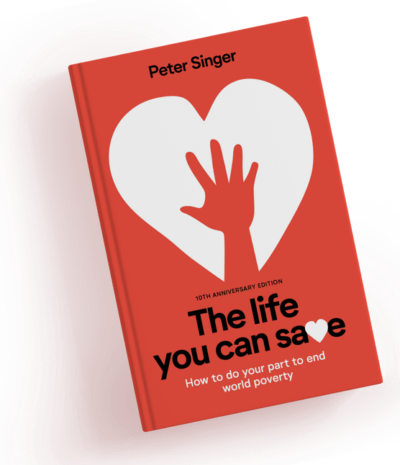
Thank you for getting to this place. You may have already read Peter Singer’s inspiring book The Life You Can Save, are considering reading it, or maybe just interested in how you too can help save lives.
The prompts in the guide below are intended to give further context to the reading experience and to give questions to ask yourself and those around you of how you – yes you, each of us – have the power to make a difference with effective giving.
I have been immersed for the last decade in The Life You Can Save nonprofit organization that I co-founded with Peter Singer, based on the content of this book. My wife and I have worked hard to become more generous as we have continued to focus more on the amazing opportunity to save lives and reduce suffering among the world’s poorest people. I hope you will feel similarly and that giving more and more effectively will actually enrich your life as it has ours.
You are invited to share a celebrity-read audiobook or ebook of this book for free – details here.
Do Good. Feel Good.

Charlie Bresler
Co-founder of The Life You Can Save
Discussion Questions
10th Anniversary Edition of The Life You Can Save
- What do you think is Peter Singer’s key argument in The Life You Can Save?
- Peter Singer begins the first chapter of his book with The Girl in the Pond thought experiment.
What is the author trying to illustrate through this thought experiment and what are the implications and conclusions he draws from it? How does it relate to his views on the equality of all human life and on giving? - How did the book impact you emotionally? Did the book make you feel guilty? Is guilt a good motivator for doing more? Are there other ways to be more motivated?
- How does Singer’s point of view differ from the traditional view regarding our ethical obligations?
- Why does Singer believe we should help people living in the developing world, rather than wealthier countries? Consider the following statement: “Some charities provide hundreds, even thousands, of times greater impact per dollar than others.”
Should this affect our giving decisions, such as giving locally versus internationally? Why or why not? How does Singer’s point of view differ from the traditional view that, “charity begins at home?” Has Singer’s argument influenced your personal views on global poverty, philanthropy and the obligations you have? - What is extreme poverty? Why is the author optimistic about our ability to eliminate global extreme poverty?
- What are the reasons people don’t give to charity? Which reasons do you find convincing and which do you not? How does Singer respond to these common objections to giving and do you agree with his responses?
- In Chapter 5, “Creating a Culture of Giving”, Peter Singer outlines specific approaches each of us can adopt to create a kinder, more giving world. Did any of the approaches resonate with you? Are there approaches you disagree with? Why?
- Consider Singer’s suggestion for a new standard of giving: roughly 5% of annual income for those who are financially comfortable, with less for those below that level, and significantly more for the very rich.
Do you agree with his suggestion? Why or why not? What is your answer to the question of how much we ought to give? - In his preface, Peter Singer writes, “At a minimum, I hope this book will persuade you that there is something deeply askew with our widely accepted views about what it is to live a good life”. Do you agree with the author? What do you think it means to live a morally good life?
- After reading the book will your spending habits change?
- Do you think the book will change your charitable behavior (e.g. amount you donate, where you donate, where you volunteer)? If so, how? If not, why not?